
NOTE: I am cross-posting this across my various platforms as it may be of interest to both my genealogy and writer audiences.
I am on the very last read of my forthcoming novel, Countess of Cons: The Story of a Gilded Age Grifter. Yes! The last read before I hand it off for one final round with my beta readers. So naturally, I want to make sure I’ve addressed all the niggling little things that bugged them the first go-round.
Like inconsistent dates and ages.
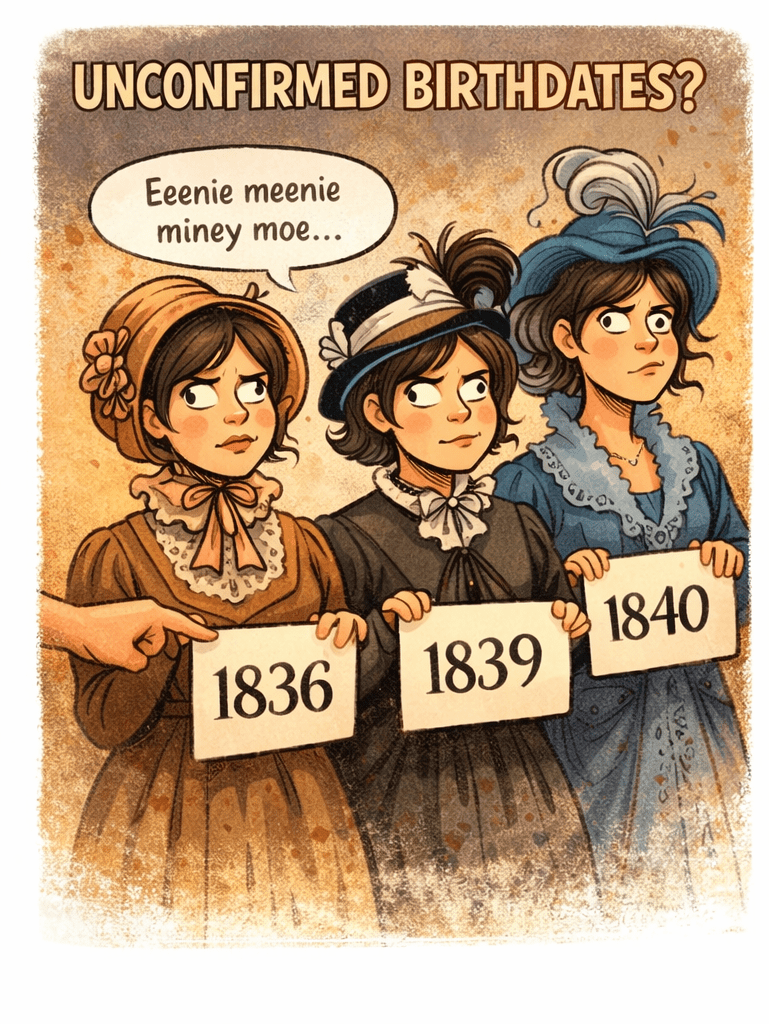
Perhaps you are not a genealogist. Or an author of family history. In that case, you may never have run across the issue of trying to determine when (and where!) someone was born.
It was pretty common for our ancestors not to know the exact day of their birth. Many were born at home. And if they arrived before birth certificates were required, there might be no official documentation at all. Religious records can help, but they can be hard to find. Or they’re gone entirely.
Such is the case with my protagonist, Catherine C. Fitzallen. Yeah—that’s not even her real name. She made it up. Along with more than twenty other aliases.
She was my husband’s great-grandmother. I discovered her secrets when I found a newspaper article about her sensational multi-day divorce trial in Kansas City, Missouri. At the time, her name was Catherine Seeley. Her maiden name was Catherine Josephine Kenney. (That’s right, Catherine—I figured it out!)
Following the contentious divorce from William Augustus Seely in 1889, Catherine turned to a life of crime, committing a series of frauds across the Midwest.
I like to think I’m a fairly thorough researcher. Although, to be fair, I initially missed the small detail that Catherine’s first child, Ida, was born in July 1860—and Catherine insisted she and William married in 1860.
(Do the math. It explains the marriage!)
In one newspaper account, Catherine claimed she was fifteen when she married. That would place her birth around 1845.
I had my doubts.
I’ve been trying to pin down Catherine’s actual age and origins since I first began researching her in 2013. Accuracy matters. But between missing records, a burned census (thank you, 1890), and Catherine’s casual relationship with the truth, I never reached a firm conclusion.
So, I gave it one more try.
We have AI now, after all.
I enlisted the help of my trusted (to a point) assistant—ChatGPT, also known in my house as Scripty McPromptface. Before AI, that meant gathering documents, building a spreadsheet, extracting data, and analyzing everything by hand.
Now? You upload the documents and ask the AI to read, compare, and produce a reasoned conclusion.
I had long assumed Catherine was born around 1839, based on my earlier work. Here’s what Scripty came up with instead:
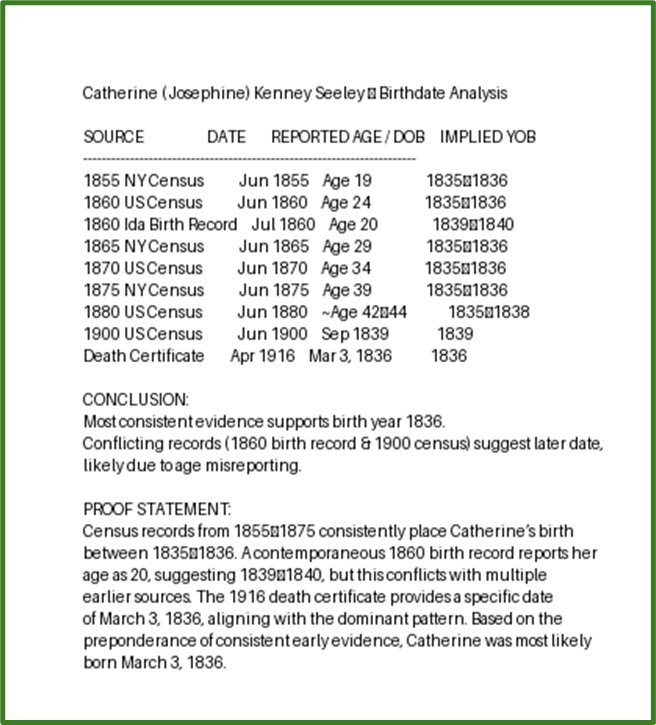
As you can see, my earlier assumption wasn’t particularly well reasoned.
Which meant I had a problem.
It also meant I had sprinkled incorrect ages throughout the manuscript—not just for Catherine, but for several other characters. So, I ran the same process for all of them.
Then I took it one step further.
I uploaded my manuscript and asked Scripty to flag every instance where age was mentioned and identify any inconsistencies—using a corrected set of birthdates. I was very specific: do not change anything, just identify the issues.
Within seconds, I had a clean, organized list of every chapter and every sentence that needed attention.
If I had tried to catch all of that manually in a 107,000-word manuscript, I’d still be working on it sometime next month.
Now, you may be thinking: Who cares? What difference does it make whether she was born in 1836 or 1840?
On the surface, not much. The story doesn’t collapse either way.
But dates are never just dates.
They shape everything around them. A four-year difference can mean the gap between a teenage bride and a woman in her twenties. Between having a first child at twenty and one at twenty-six. Between someone acting impulsively—and someone who should have known better.
More importantly, the process of figuring it out matters.
When records disagree, you don’t just pick the one you like best. You weigh them. You consider who gave the information, when it was recorded, and how likely it is to be accurate. You build a case.
That’s where genealogy stops being a collection of names and becomes an act of interpretation.
In this case, the question wasn’t just when Catherine was born.
It was: Which version of her life do the records actually support?
And it’s exactly that kind of question—the ones that start small and spiral into something much larger—that shaped Countess of Cons.
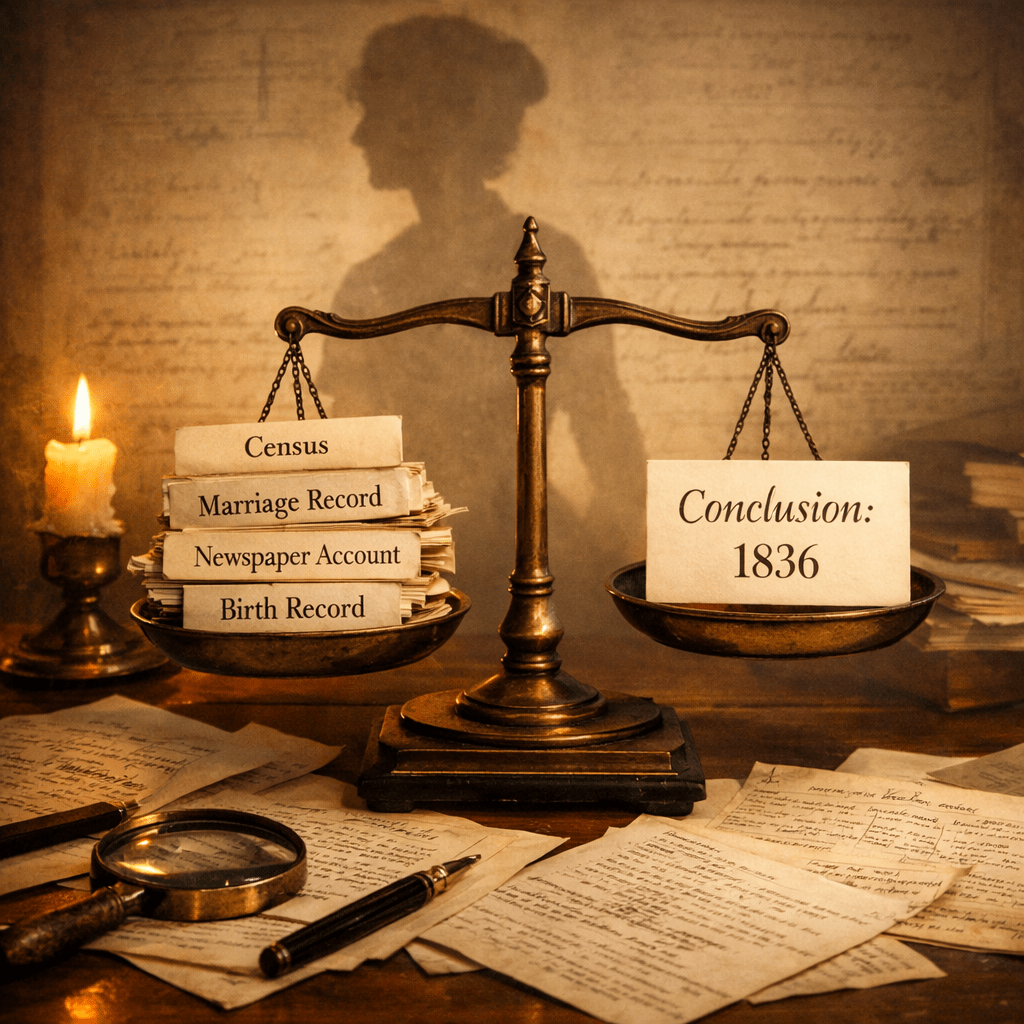
Because Catherine’s story isn’t just about what she did. It’s about who she was—and how much of that we can truly know.
If you’re curious to see how all those fragments—documents, contradictions, and a few well-earned assumptions—come together, Countess of Cons: The Story of a Gilded Age Grifter is expected to be published in summer 2026.
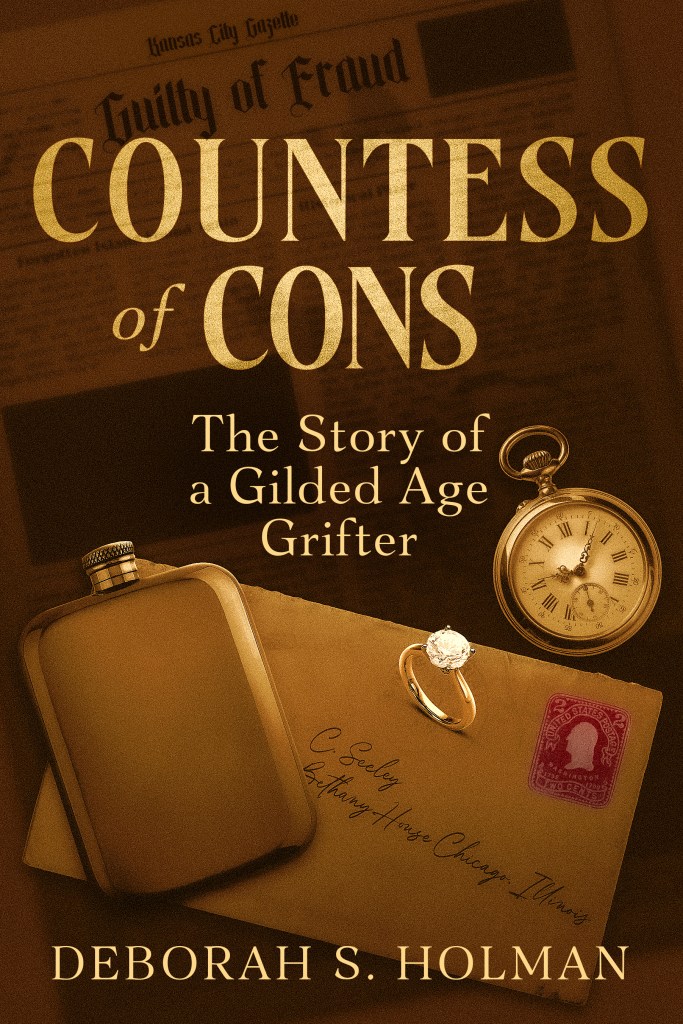
And I promise… the dates are finally right.
Stay connected with my progress. Subscribe to my newsletter. Never any spam. Always something interesting!
 Who We Are and How We Got This Way
Ooooh the mystery deepens. Great use of AI to help the writer analyze and fix stuff. Really looking forward to reading this later in the year!
LikeLike