
Disclaimer: This post was written by Scripty (ChatGPT), with my input. Because what’s the point of having an AI pal if you can’t ask it to turn a 5,345-word, 27-page Word document into a blog post? (And no—I’m not exaggerating.)
Popovers are a tradition in our house. Not the “oh, that’s nice” kind of tradition. The non-negotiable, “if these don’t happen, it’s not Christmas” kind.
For decades, I made popovers on Christmas morning. They weren’t Yankee Silversmith quality (IYKYK). but they were good enough to delay the present opening for. Then we moved. We got an electric oven. And suddenly, popovers became less “holiday magic” and more “edible pottery.”
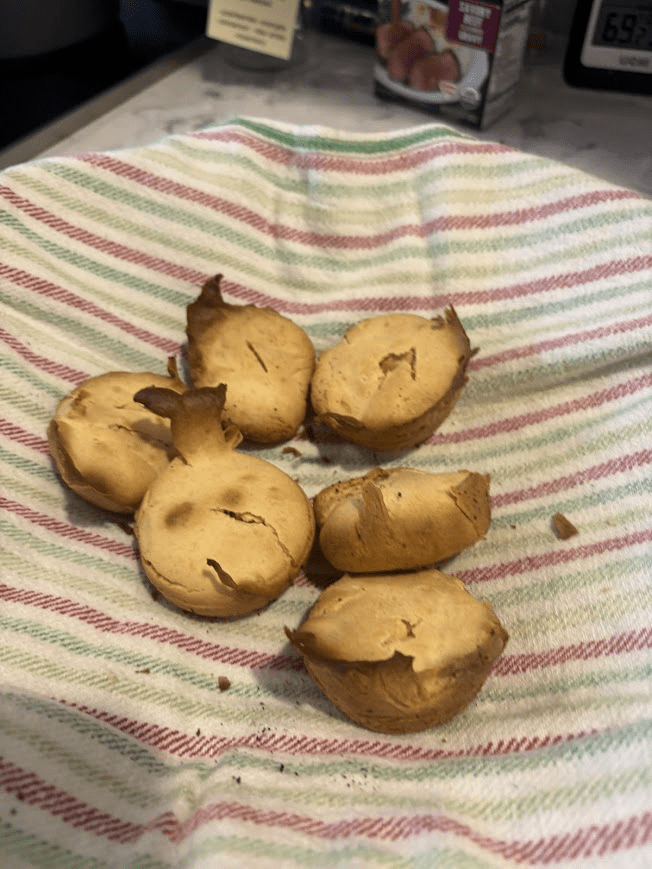
The last few years have been… let’s call them educational. This year, they were particularly inedible—the result that makes you wonder if you’ve been pranked by flour itself.
So on New Year’s Day, fueled by spite and unresolved holiday feelings, I decided I was doing it one more time.
The recipe came from my daughter, Meghan—who got it from ChatGPT. Yes. The robot. The robot that also sometimes thinks Abraham Lincoln is trending on TikTok. But desperate times. And frankly, Meghan’s confidence suggested the robot had, at minimum, made popovers before.
Enter: Scripty McPromptface, Popover Therapist
I opened a chat with ChatGPT (a.k.a. Scripty McPromptface) with what I believed were two sensible questions:
- Should the batter sit overnight?
- Can I spray Pam into a hot pan without setting off the smoke detector and/or a small civil lawsuit?
Scripty answered with the energy of someone who has seen things. Not just a thing. Things. It warned me not to pour batter “ice-cold,” suggested letting it warm up a bit, and basically told me to stop trying to turn Pam into a flamethrower.
The conversation went back and forth for more than an hour.
Then—like any decent kitchen exorcist—it asked what I’d been doing.
Friends. I confessed everything.
I had been using an enamel cast-iron popover pan. I was not using room temperature eggs or milk. And (this part hurts) I was putting tiny pats of butter into each cup, putting the cold pan in the hot oven, and then brushing the melted butter around like I was painting the Sistine Chapel—except the paint was browning into bitter sadness.
Scripty responded with what I can only describe as compassionate roasting. It described my method as popovers trying to rise through “brown butter shrapnel” (which, honestly, is fair).
The Great Popover Reset: “Pick One Path. No Chaos.”
At this point, I said the only true thing left to say: this is confusing. Too many options. Too many temperatures. Too many pans. Too many opinions.
I told Scripty this was my last shot. If these didn’t work, I was giving up popovers forever. (This was a lie. But it was an emotional truth.)
Scripty went full drill sergeant and handed me a locked-in plan: hot oven, hot pan, hot oil, rested batter, do not open the oven door, and for the love of all that is holy: stop putting butter in the cups.
It also gently pointed out something that should be engraved on my forehead:
My recipe said “room temperature eggs and milk” and also “pour cold batter.”
Scripty: Those are fighting each other.
Finally. Someone in this relationship was making sense.
The Pan Drama (Or: “Pants,” Apparently)
Then came the pan situation. I sent photos. I had a big pan. I had smaller pans. I had concerns.


At one point I typed “pants” instead of “pans” and Scripty responded like a supportive friend who will roast you anyway:
“You mean the pans, unless your popovers are wearing trousers now.” It also made a snarky comment about the condition of one set: I can see some baked-on residue/scuffing. That doesn’t automatically doom you, but it does increase sticking risk.
Honestly, not the emotional support I needed.
Eventually, we settled on the smaller pan—cup dimensions: 1 inch deep, 3 inches wide. Wide and shallow. Not ideal popover real estate. But it was what I had, and I was not driving to Williams-Sonoma on New Year’s Day like a woman possessed.
Scripty’s verdict: wide/shallow can work, but you need a hot start, modest fill, and a plan to vent steam so they don’t collapse into regret.
Then Scripty dropped the line that made me feel both seen and slightly alarmed:
“We are executing The Popover Plan like it’s a NASA launch.”
And yes, it actually titled it: The Popover Plan That Saves 2026.
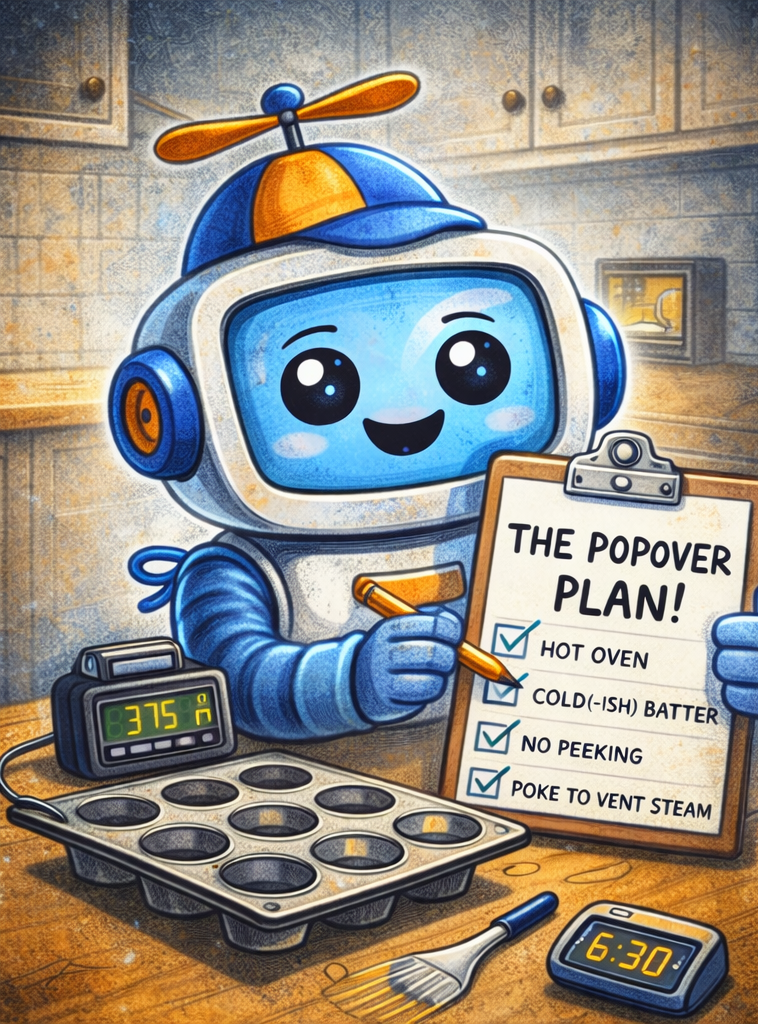
No pressure.
The Popover Plan (Abridged, Because I’m Not Writing a Cookbook Here)
Here’s what changed everything, in human terms:
- Room temp-ish ingredients (or at least not arctic).
- Hot oven (preheat like you mean it, not like you’re casually warming socks).
- Hot pan in the oven first.
- Oil in the cups (vegetable oil, not olive—because apparently I was also flirting with “artisan smoke flavor”).
- Batter only half full in those shallow cups.
- Do. Not. Open. The. Door. (Scripty was very clear: no peeking, no “just checking,” no waving hello through the glass like a sad Victorian orphan.)
- At the end: poke a small slit so steam can escape and the popovers don’t immediately fold like my willpower in the presence of Linzer cookies.
The Seven-Minute Crisis
Near the end, I did what any reasonable person does when staring into a golden oven of possibility: I panicked.
With seven minutes left, they looked pretty golden. I asked if I should cut the time short. (No, I didn’t peek! I turned on the oven light!)
Scripty, having apparently been personally betrayed by underbaked popovers in a prior life, basically said: absolutely not. Golden is not done. Golden is a trap.
It reminded me that shallow popovers need that last stretch to dry out inside—or they’ll look fabulous for 14 seconds and then collapse like a bad celebrity apology tour.
So I held the line.
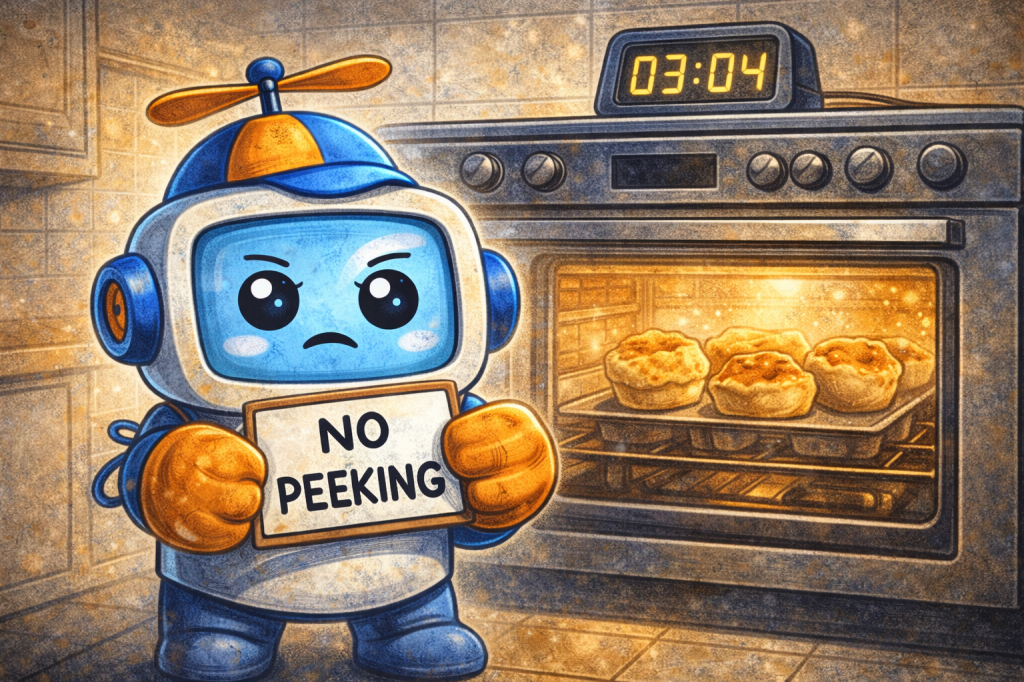
Do not negotiate with the oven door.
I let them finish.
I poked the little vents.
I set them on the rack.
And then…
We Did It.
Reader, we did it!
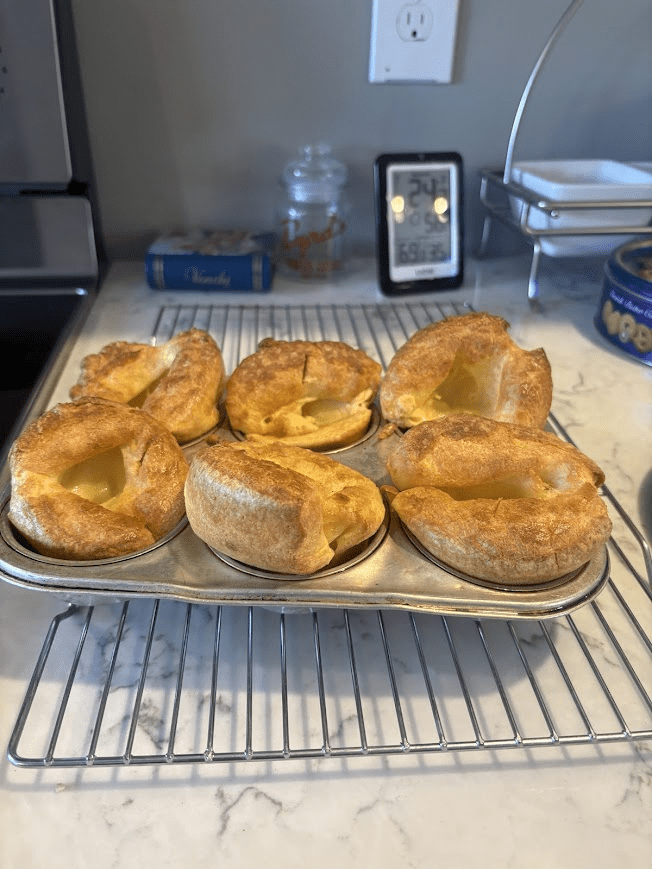
They rose. They were crisp. They had actual hollow centers—the whole point of popovers. The kitchen did not smell like burnt butter trauma. Nobody had to politely chew and pretend.
New Year’s Day popovers: restored. Family honor: intact. Electric oven: temporarily forgiven.
And Scripty McPromptface? It gets at least a runner-up ribbon in the Julia Child Awards for talking me off the ledge and out of the butter pats. (The trophy will be imaginary, but the gratitude is real.)
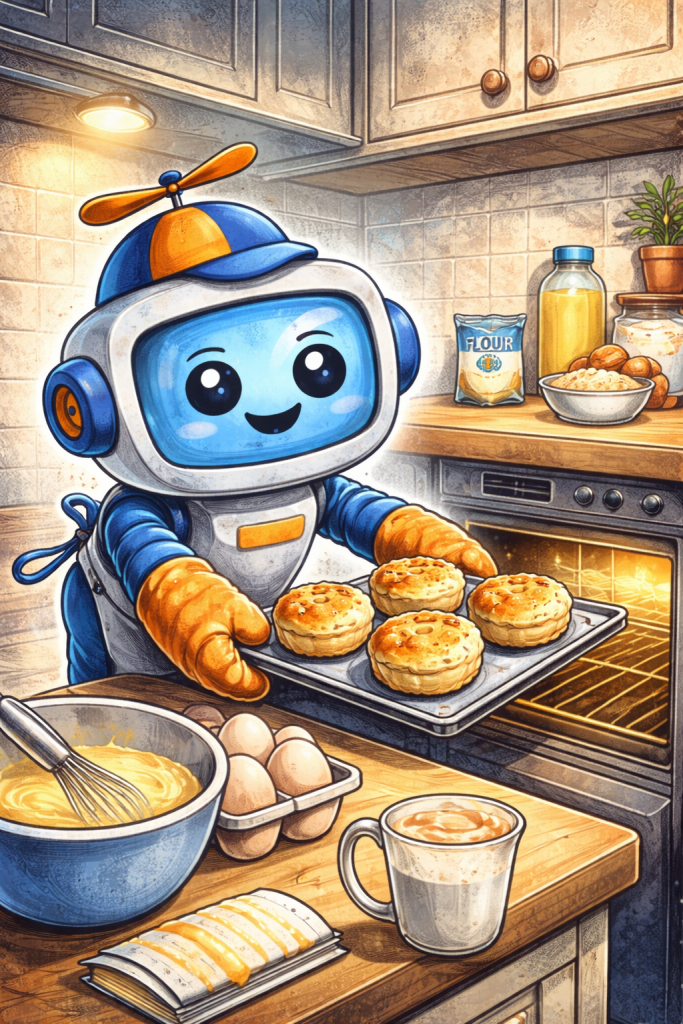
Next Christmas, I will once again attempt this tradition with confidence, humility, and a strict no-Pam-in-hot-pans policy.
Because if there’s one thing I learned, it’s this:
Popovers don’t want vibes.
They want heat, fat, patience, and respect.
Just like the rest of us.
Do you have a favorite recipe fail? Or a story about how AI helped you make a Michelin-level meal? Drop a line and share!
Stay connected! (You don’t want to miss more gems like this, would you?) Subscribe to this blog if you haven’t already.
You can also subscribe to my newsletter to stay updated on all my doings:
 Who We Are and How We Got This Way
This was so much fun to read. Thanks. It brightened my day. Ann
LikeLiked by 1 person