
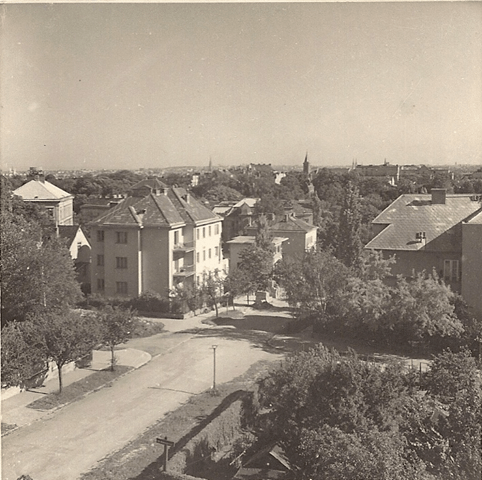
I’ve been stalling for a few days, deciding on a photograph on which to base my first blog post for the Geneabloggers Fab 40 challenge. And then today, Randy Seaver posted this prompt for his weekly Saturday Night Genealogy Fun—Do you recall the layout of one of your family homes? Can you estimate the size of the house and the rooms? What features were in each room? Can you draw the floor plan?
Inspiration struck! In 1996, my mother sketched the floor plan of the apartment she grew up in before fleeing Vienna for the U.S. in 1938. She scribbled it on a scrap of paper, adding the note “Out of Porportion” [sic]. As if anyone would expect her to produce a scale drawing at her kitchen table!
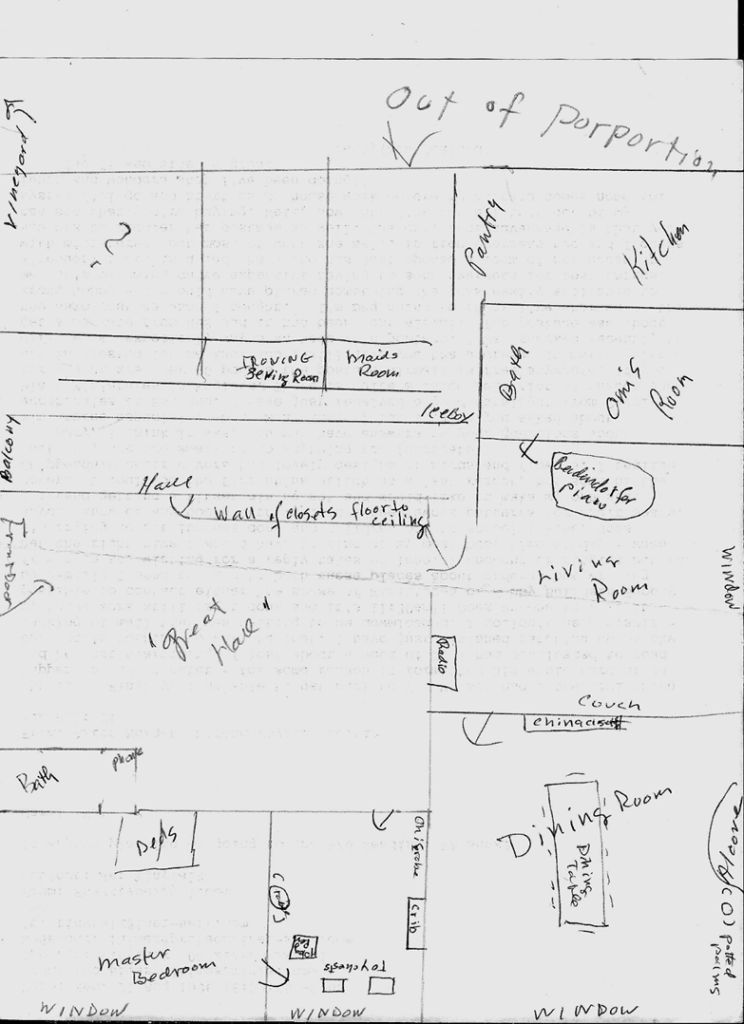
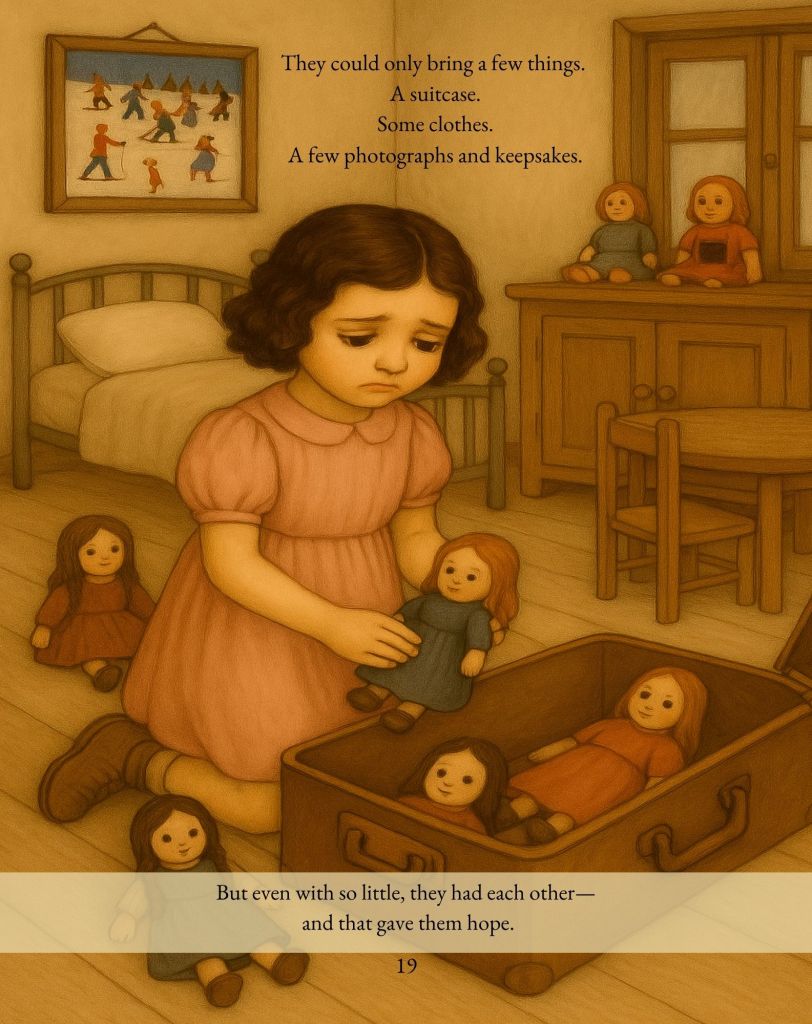
That drawing became invaluable when I wrote about the family’s experience in my novel Nothing Really Bad Will Happen. I could track the characters precisely as they moved from room to room. Later, when creating the children’s adaptation Doris’s New Home, I knew exactly what was in my mother’s room—or at least how she remembered it, fifty-eight years later.
Her sketch also revealed much about the family’s standing in Vienna: a maid’s room, a sewing and ironing room, and a huge foyer (the “great hall”) in addition to three bedrooms, two baths, kitchen, pantry, dining room, and living room. I still wish I had asked why the icebox was outside the kitchen, but I love that she thought to include the phone.
Inspired by that sketch, I turned to my own memories of my maternal grandparents’ apartment in New Rochelle, New York. My Uncle Emile, my grandmother’s brother, managed the building at 30 Eastchester Road and generously offered both sponsorship and a home when the family first arrived in 1938. I recreated that apartment in a floor plan for a blog post years ago, and I enjoyed retracing those rooms as I wrote about my family’s early days in America.
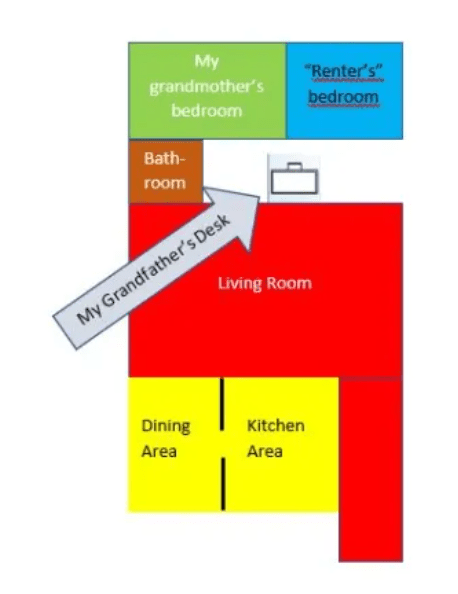
Finally, there is the house that will always be “home” in my own mind: 61 Goebel Road in Hamden, Connecticut.
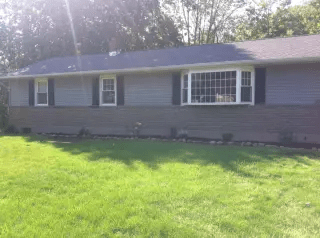
My parents moved us there in 1959, a 1,430-square-foot ranch where five children grew up—eight on Sundays when my step-siblings joined us. For my mother, it was more than a house. After a lifetime of apartments, it was her first single-family home, a place she truly owned.
One of my favorite parts of writing my novel was recalling her joy in that space, her delight in finally having a home of her own. (BTW—I wrote an extensive post about the “Family Homestead” back in 2018.
I don’t need a sketch to remember Goebel Road. I can still walk its hallways in my mind: the sound of laughing (sometimes screaming), the layers of paint which undoubtedly shrank the square footage (we repainted the rooms A LOT!) and ALL the craziness kids cook up. But most important was the sense of permanence it gave my mother. She lived there until her death in 2011. Later, our youngest daughter and her husband made it their first home too, until they sold it in 2019.
Looking back at these floor plans—some drawn, some remembered—I see more than rooms and measurements. I see the story of how my family moved from uncertainty in Vienna, to refuge in New Rochelle, to the stability of Hamden. Each home held not just furniture and doors and windows, but the unfolding of lives, dreams, and a hard-won sense of belonging.

 Who We Are and How We Got This Way
❤️Sent from my iPhone
LikeLike
Fantastic- now you’ve given me a delightful morning looking back
LikeLike
I loved reading this blog Deb. I too can easily remember the rooms in the home I grew up in and the family activities that took place in them. there is nothing like having the stability of Home! And the sense of belonging and security. You have stated your sentiments so very nicely. And have given me inspiration to write about the people and happenings of that home. Charlotte
LikeLike