
Wednesday
I spent two and a half hours in the Expo Hall at the Authors’ Table. Technically, I was only assigned a one-hour slot, but I figured I’d stay until I got hungry or someone else needed the table!
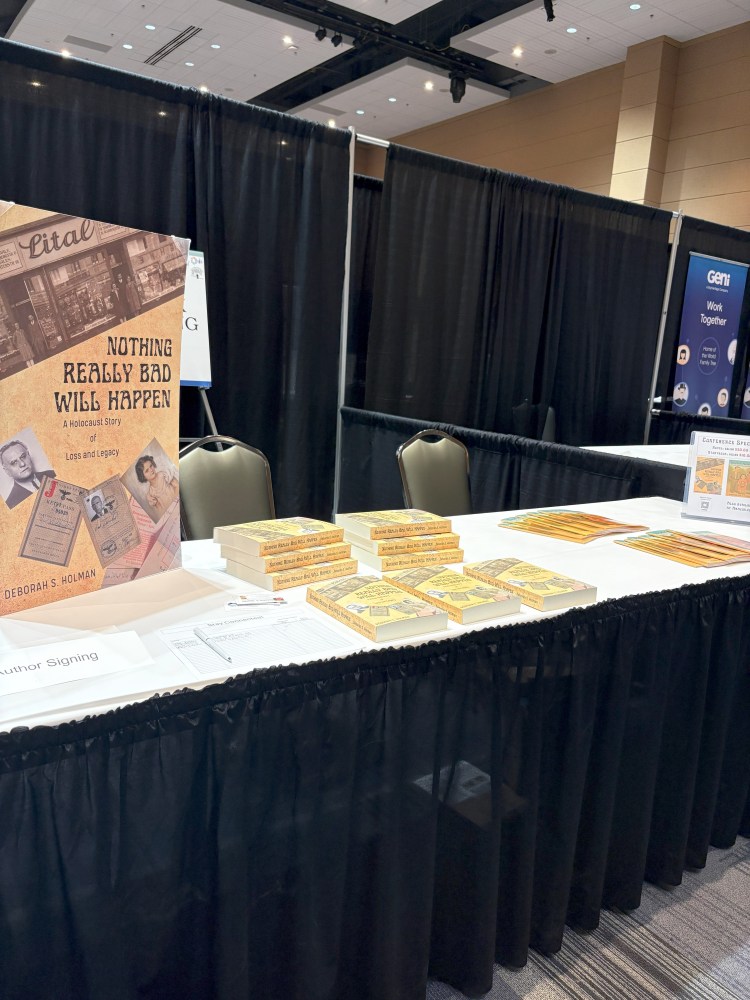
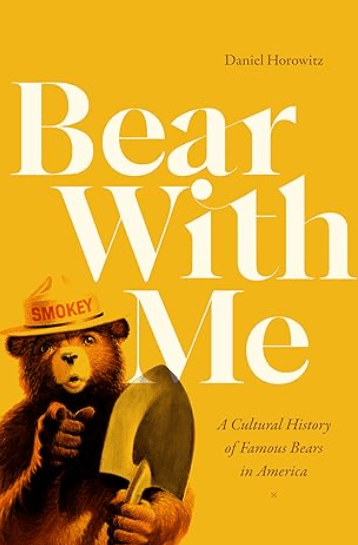
I met some lovely people, including Daniel Horowitz, the Gala speaker for the next evening. (Not the MyHeritage Daniel – who knew there were two??) He suggested we do an author exchange, so I am now the proud owner of his newest book.
More on that later.
The stars aligned (or perhaps someone “up there” made it happen) when Marsha Raimi stopped by. She is connected to the documentary Three Minutes: A Lengthening, based on Glenn Kurtz’s book Three Minutes in Poland: Discovering a Lost World in a 1938 Family Film. If you’ve read the introduction to my novel Nothing Really Bad Will Happen, you’ll understand why meeting her felt so meaningful. If you haven’t, click HERE for my blog post about that connection.
After selling a few books, I stopped at the APG (Association for Professional Genealogists) table to meet my Facebook friend, Kate Penney Howard. When I told her about meeting Marsha, she agreed I had to see the film. So I said a quick goodbye and dashed over to the ACPL, where the film festival was underway.
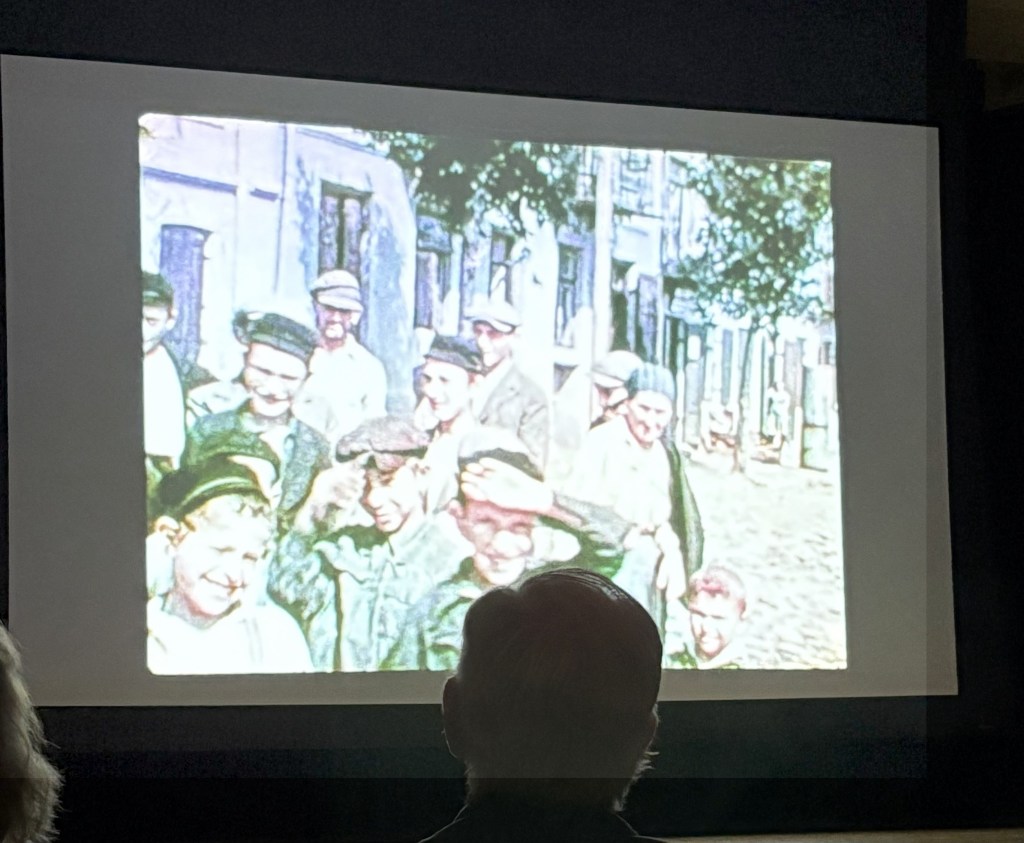
Despite being the very spark that pushed me to finally write my novel, I had never actually seen the original footage. The documentary was fascinating. It examines three minutes of 16 mm home-movie footage shot in 1938 by David Kurtz in Nasielsk, Poland. These rare color images are the only known moving images of that Jewish community just before it was destroyed during the Holocaust. Remarkably, the entire one-hour film was built around that three-minute clip—slowed down, sped up, zoomed in—while narration explained how Glenn located the film and traced descendants (and a few survivors!).
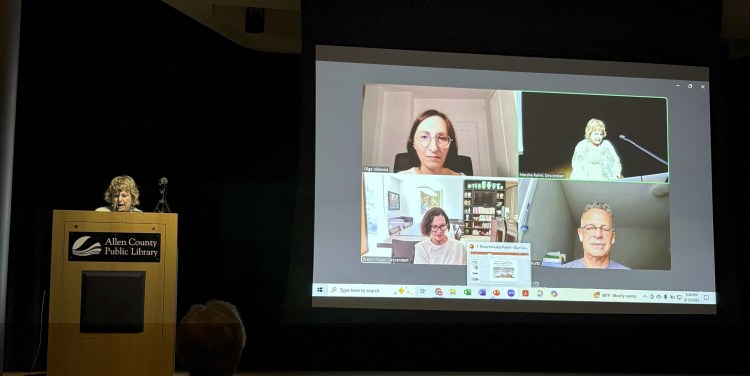
Afterward, Marsha moderated a panel discussion with Glenn and a descendant of the shtetl, who joined via Zoom. I chose not to interrupt to share that Glenn’s talk back in 2016 inspired me to start my book; I’ll email him instead.
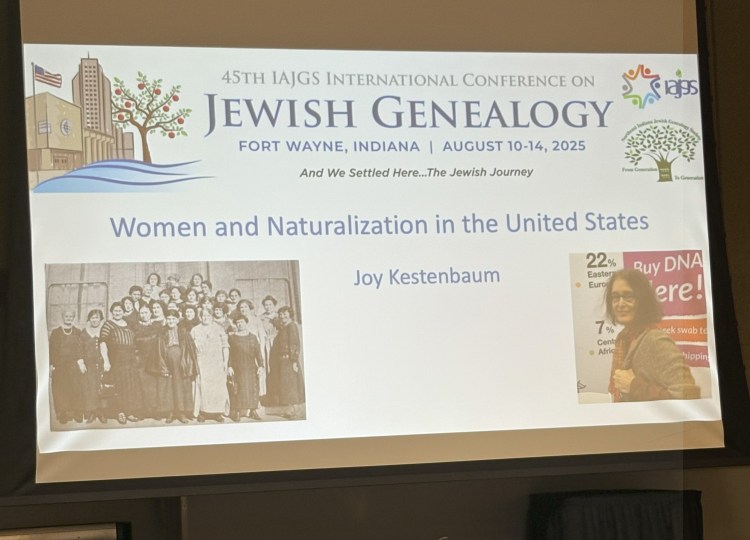
The last session of the day was Women and Naturalization in the United States with Joy M. Kestenbaum. While I didn’t come away with new insights on how these laws affected women over the decades, it was still a worthwhile review.
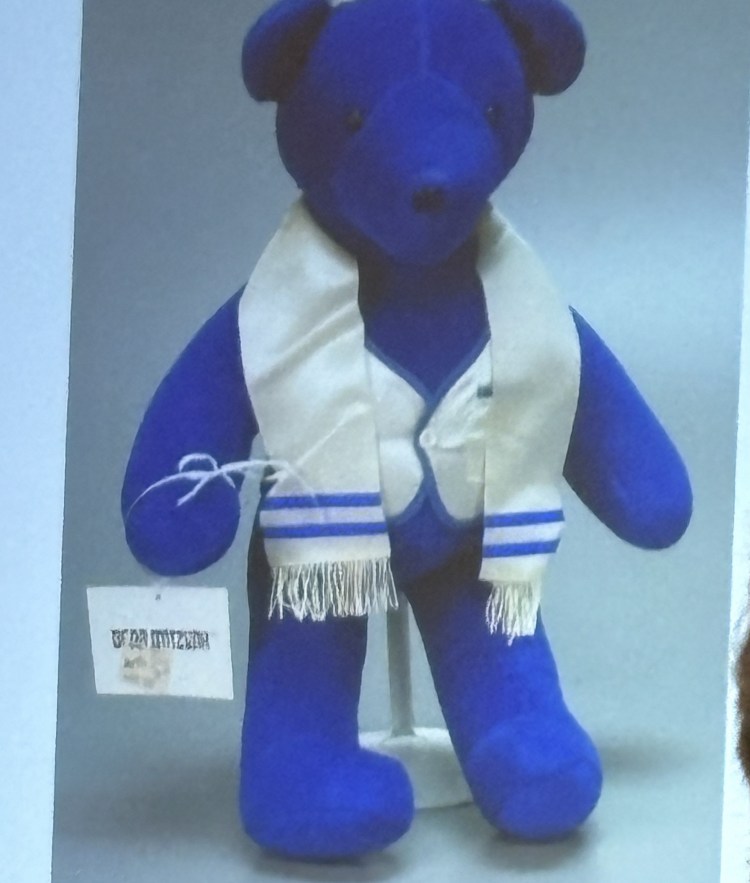
The evening’s Gala Banquet featured keynote speaker Daniel Horowitz, who shared stories from his book Bear with Me: A Cultural History of Famous Bears in America. He highlighted two: the story of Jewish immigrants Rose and Morris Michtom, pioneers of the original Teddy bear, and the refugee symbolism of Paddington Bear, with its ties to Jewish immigration experiences.
Thursday
The day began early with the 8:15 Jewish Bloggers meeting. A few people I had hoped to see weren’t there, but I enjoyed chatting with Emily Garber of (going) The Extra Yad and Drew Smith of The Genealogy Guys. Drew raised an interesting comparison: Jewish genealogy conferences often focus on records and resources, while general genealogy conferences tend to emphasize methodology. I hadn’t considered that difference before.
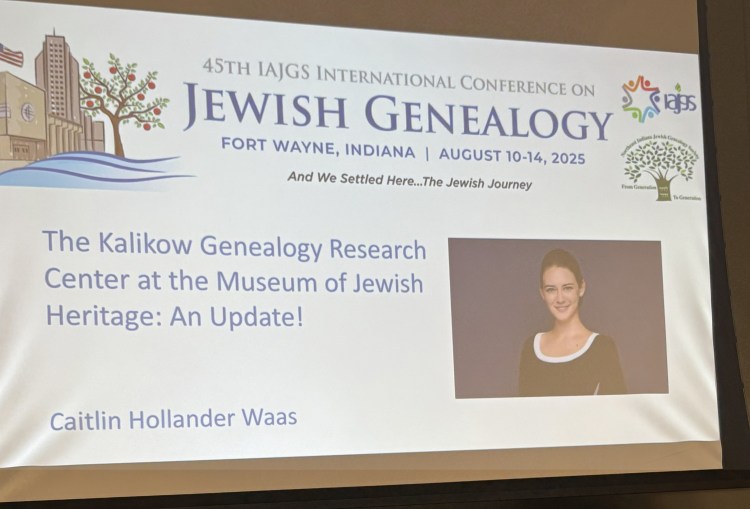
Next was Caitlin Hollander Waas’ presentation on the Kalikow Genealogy Research Center at the Museum of Jewish Heritage. Open just two years, the center (located in Battery Park, NYC) offers one-on-one research help. Walk-ins are welcome, but appointments are recommended. Sounds like I need to plan a trip!
Scott and I grabbed a tasty lunch at JK O’Donnell’s Irish Pub (a warm-up for Ireland in September!) before I headed to Tammy Hepps’ talk: The Dark Side of the Census No One Told You About.
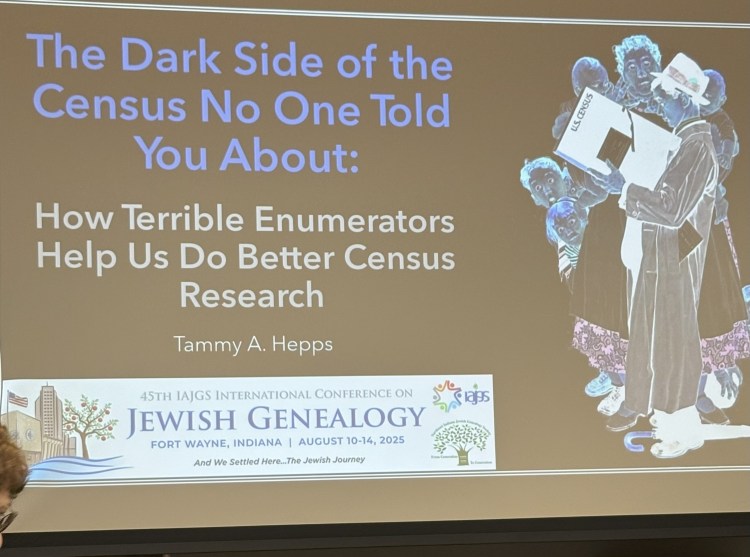
Tammy’s presentation may be one of the best I’ve ever attended. Her slides were lively, and her insights eye-opening. I had no idea how many errors census enumerators made—some unintentional, others deliberate. If you ever get the chance, don’t miss this talk. You’ll never look at a census record the same way again!
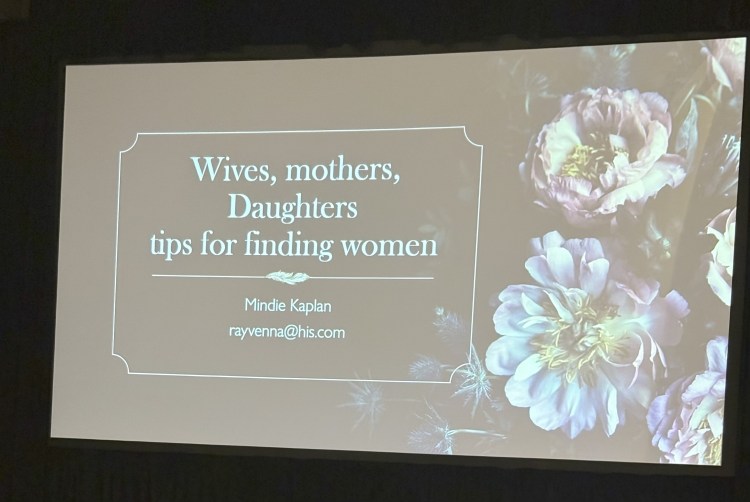
The last session I attended was Mindie Kaplan’s Wives, Mothers, and Daughters: Tips on Finding Women. I’d hoped for strategies to help with the elusive Catherine Seeley, but the case studies offered little new hope.
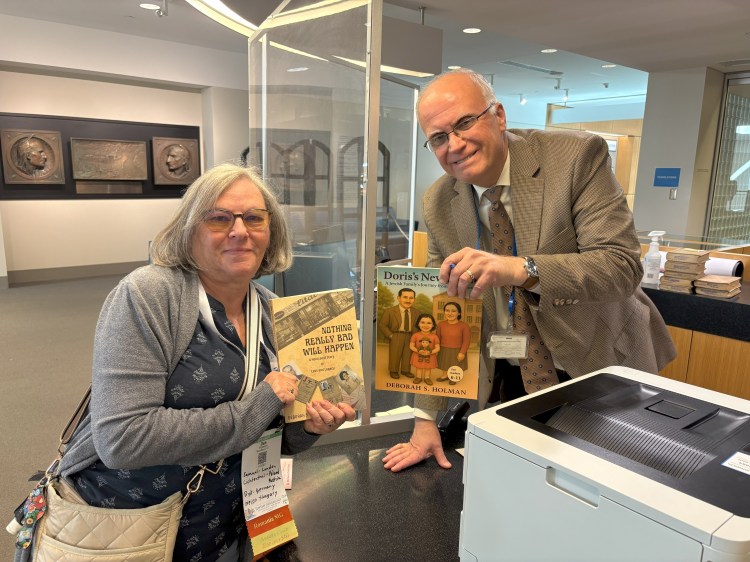
Before leaving Fort Wayne, I made another trip to the ACPL to donate my book. Earlier in the week I had met Aaron Smith, the Materials Manager for the Genealogy Center, who assured me they’d love to add both my books to their collection. I just missed him at the library, but as luck would have it, he walked by while I was cooling off in the Convention Center lobby. A perfect way to wrap up the week!
I also met Daphnah Sage from the Boston JGS—and discovered yet another Vienna connection. One of JGSCT’s goals is to strengthen ties with other regional JGSs, so it was wonderful to meet her in person.
Which brings me to a comment about next year’s conference being entirely virtual. Many attendees are disappointed, and I can’t say I’m 100% thrilled either. The best experiences I had this year came from being there in person. Still, I understand the reasons for the decision. I’ll share my thoughts in my next post: Reflections from Fort Wayne: My Week at IAJGS 2025.
 Who We Are and How We Got This Way
How as attendance at this conference? The ACPL is such a great place for research, which helped, I hope.
LikeLike
About half of last year. 😞 I’ll discuss that in my next post 😂
LikeLike
A fascinating week for you ! And
LikeLike
I wonder whether it wouldn’t be a good idea to have the next in person conference in the New York area – somewhere where it would be just a train ride into Manhattan and all it would have to offer. Maybe Queens? lots of cemeteries to visit – or Brooklyn, or Westchester – and lots of non stop flights from different areas of the country
LikeLike