
RootsTech is always an energizing whirlwind of ideas, connections, and discoveries, and this year was no exception! Today was the last day of classes, but Cheryl and I are staying a couple extra days to make use of the Family Search Library.
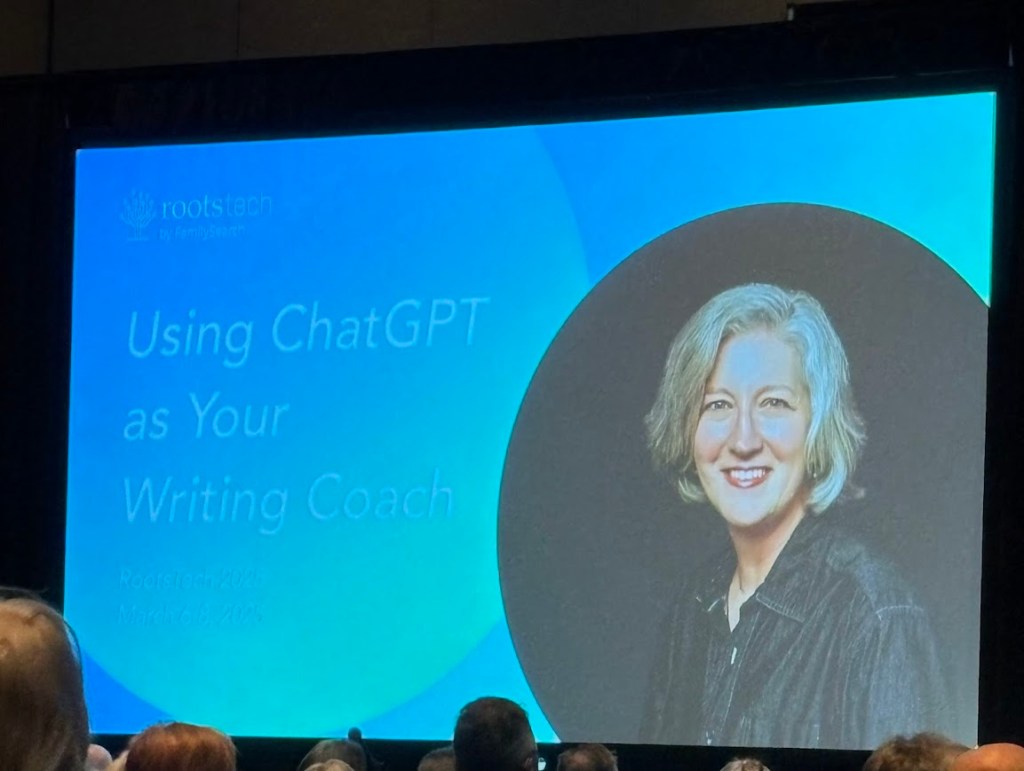
My first session of the day was Using ChatGPT as Your Personal Writing Coach
Denyse Allen spoke about using ChatGPT as your personal writing coach—not doing it for you, but doing it with you.
Denyse had some fantastic tips for how to make AI work with you when writing, particularly for family history projects. Here are a few of my favorite takeaways:
1. Planning Your Project: Ask Better Questions
Instead of diving in blindly, Denyse recommends using ChatGPT to help clarify your thinking. A great starting point is simply asking:
• What are three questions I should answer before starting this project?
• What gaps might I need to fill in my research?
• What potential pitfalls should I watch out for?
Sometimes we’re too close to our own work to see what’s missing. Having an external “coach” to challenge our assumptions can make all the difference.
2. Getting Motivated to Write
Struggling to start? ChatGPT can act as a writing coach rather than just a tool. Tell it exactly what’s holding you back, and then ask:
• What are three ways I can overcome this?
• How can I set small, achievable goals to get my writing done?
• Can you give me a motivational push based on my specific struggles?
Denyse stressed that AI should be used with a cognitive behavioral coaching approach—it shouldn’t just agree with you! If you say, “I’m a terrible writer,” don’t let it just validate your self-doubt. Instead, push it to challenge those thoughts and offer actionable ways to move forward.
3. Organizing Research with AI
Denyse highlighted ChatGPT’s “Projects” feature. (available only on paid accounts), She suggested you upload your research (temporarily) and then interact with it in voice mode. This can be a game-changer for organizing complex research.
Some ways to make AI work for you:
✅ Ask ChatGPT to organize your notes into an outline (chronological or thematic).
✅ Tell it not to add additional information—just structure what you already have.
✅ If you’re revising, ask it to suggest changes with asterisks so you can compare them to your original work.
4. Write First, Edit with AI
Denyse was firm on this point: WRITE THE FIRST DRAFT YOURSELF. Then, use AI for refinement. Once you have a draft, you can ask:
• How can I enhance this for my audience?
• Does the structure make sense for a general reader?
• What areas need more clarity or detail?
This is essentially asking for a developmental edit, which can help shape your work into something stronger while still maintaining your voice.
5. Using AI for Presentations
Denyse shared how she used ChatGPT to develop her own program:
✔ Wrote a proposal
✔ Asked AI for an outline
✔ Drafted the presentation
✔ Generated images
✔ Had AI review the slide deck
✔ Practiced with real people
✔ THEN used AI to fine-tune the final revision
One simple but brilliant takeaway? At the end of your presentation, use a QR code to offer a giveaway—a great way to collect email addresses and grow your audience.
After Denyse’s session, we spent some time wandering the Expo Hall, soaking in all the latest genealogy tools and gadgets. Later, we met up with Lynn Broderick, a fantastic writer and genealogist. It was so nice of her to take time to chat!
Lynn is part of the Coalition for Responsible AI in Genealogy (see yesterday’s post) , which is doing important work around ethical AI use. On top of that, she’s writing a fascinating family history about her uncle’s decades-old murder case. I can’t wait to hear more about it during our writing sprints.
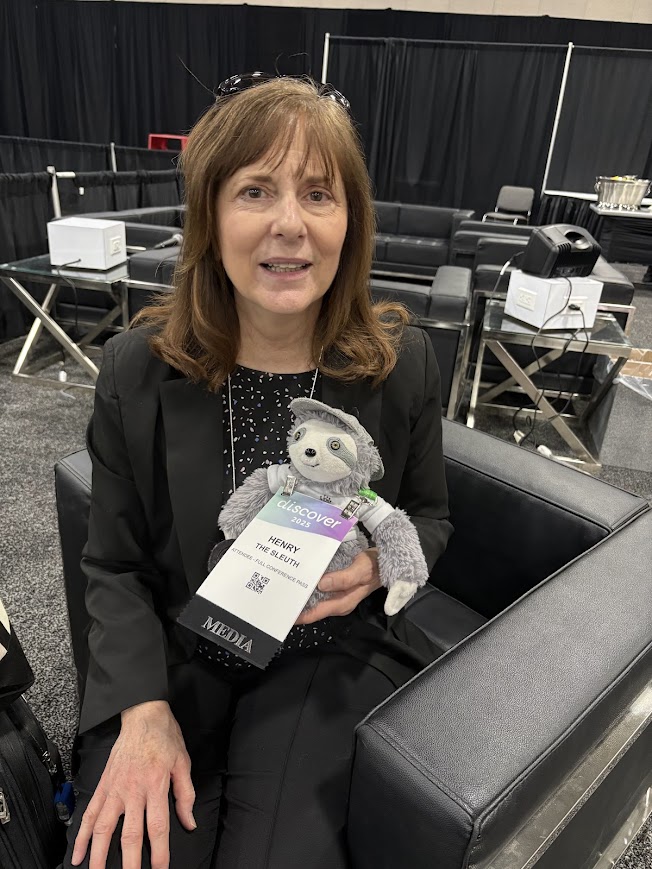
She also introduced us to Henry the Sleuth, her adorable stuffed sloth who apparently is quite the genealogy detective. (Clearly, I need one of these for my research trips!) Read that story on her blog, The Single Leaf.
After lunch (leftovers in the hotel lobby – we are very frugal!) , we headed back to the Salt Palace for another session. Cheryl split off to the Family History Library, where we’d meet up later.
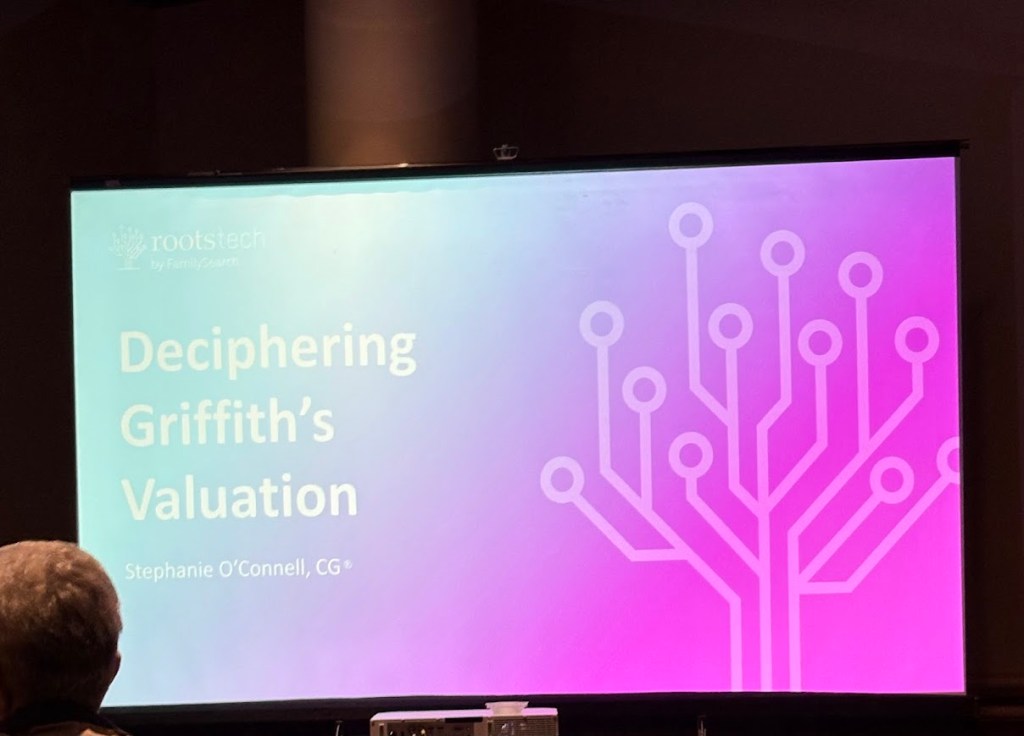
My final session was Deciphering Griffith’s Valuation
Stephanie O’Connell’s class on Griffith’s Valuation (Ireland) was one I had high hopes for. Could this be the key to unlocking the mystery of where Scott’s great-grandmother, Catherine Kenney, came from?
Some quick takeaways:
✔ 1838: The Poor Law introduced a separate valuation system.
✔ 1846: The Tenement Valuation Acts added names to records.
✔ 1846-1852: Griffith’s Valuation provides a snapshot of Ireland right after the Great Famine.
To dig into these records, Stephanie recommended AskAboutIreland.ie.
I’ll be honest—this session was a little over my head. Just as I was contemplating slipping out, a very loud throat-clearing noise erupted behind me. At first, I was just grateful for my mask (because, let’s be real, I assumed someone had a bad cough). But then it became clear this was serious—someone had collapsed. A team quickly rushed in to help, and thankfully, the person regained consciousness within seconds. I decided to step out, check with staff to make sure he was okay, and take a breather. That was enough Irish genealogy for the day!
Before wrapping up, I met up with Lynn Broderick again at the media hub and gave her a copy of my book—so exciting that she wanted to read it! We also discovered we’re both going to Ireland in September for Lynn Palermo’s Family History Writing Retreat! So that is incredibly exciting. She’s taking her daughter and I’m going with my husband. I had to apologize because apparently Scott and I snapped up the room that she and her daughter really wanted. She forgave me!
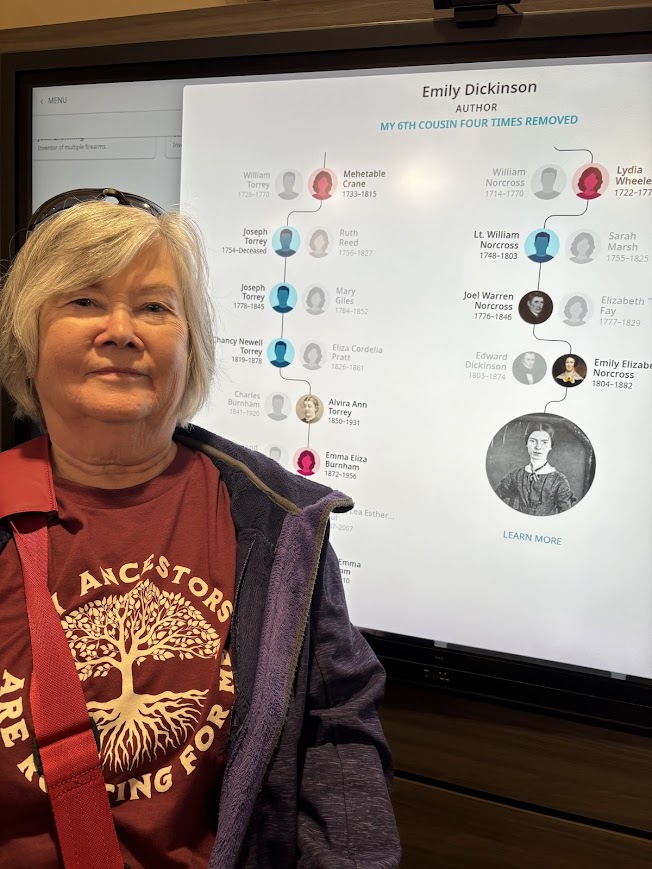
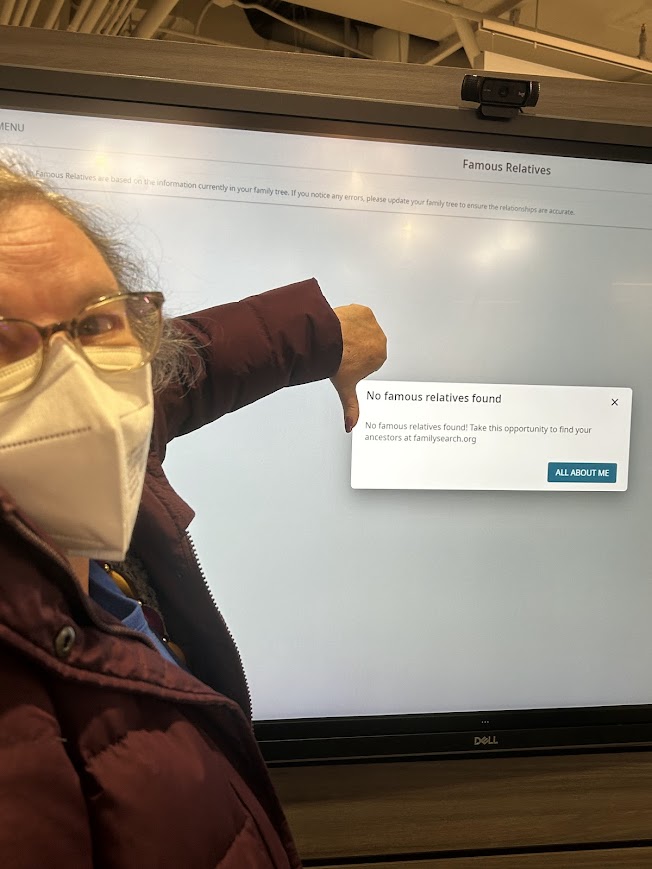
At 4:00, Lynn Bliss and I headed for the Family Search Library to meet up with Cheryl. Lynn and Cheryl has some success with their searches. I sat on a couch and waited for my overloaded brain to clear. Before we left, we did an activity to see how many famous people e were related to.
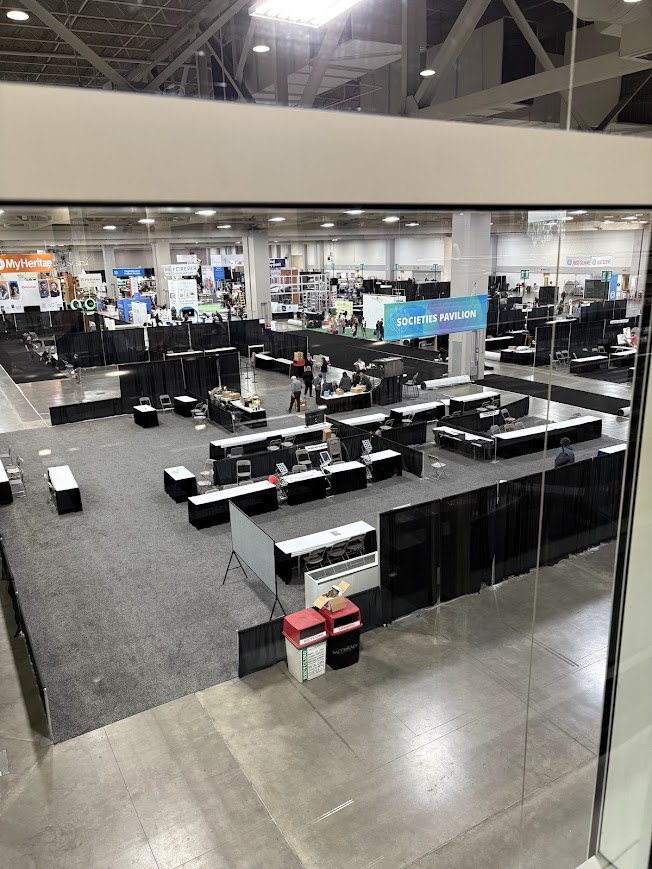
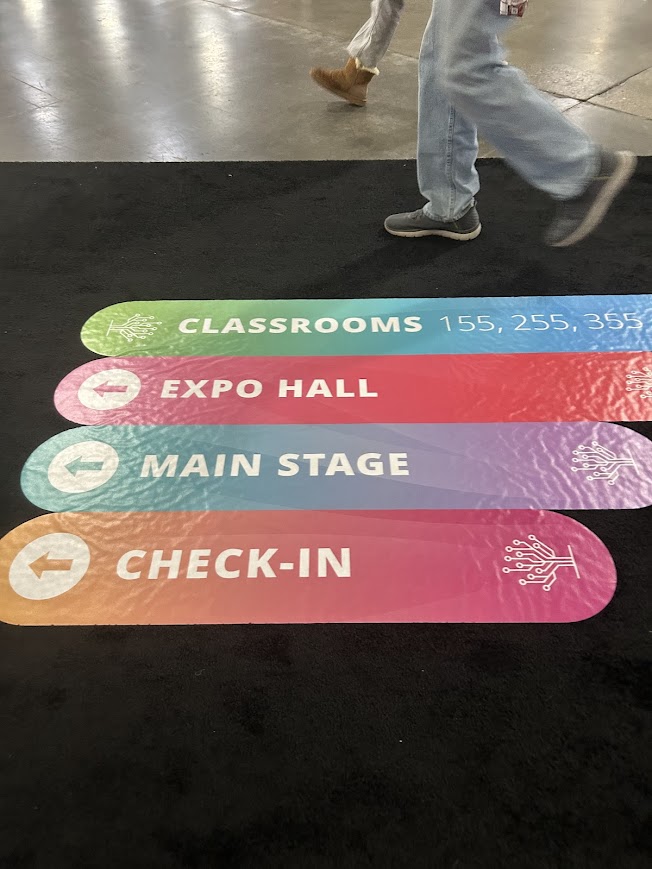
So that’s it. Another Rootstech event has come and gone. When I was sitting in the upper level looking down into the expo hall as all the busy bees are wrapping stuff up, I remembered a few times when they were rolling the carpet up behind Cheryl and me as we walked out!
The Secret Revealed!
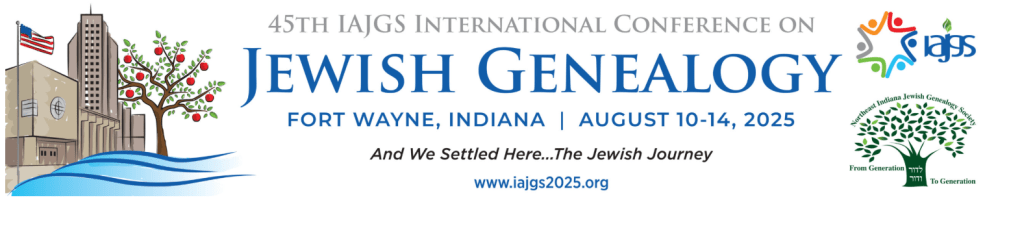
You may remember that yesterday I told you I had a secret. Well- I took a big risk and submitted a proposal to the annual IAJGS conference. Yesterday I found out that I was accepted to present my workshop: Write Your Heirloom’s Story at the annual conference of the International Association of Jewish Genealogical Societies in Fort Wayne, Indiana in August. So, good thing I went to that session on becoming a genealogy speaker because it looks like I’m onto bigger and better things! Looks like my genealogy speaking career is taking off!
Even though Rootstech is over, we will be in Salt Lake for two more days. Tomorrow we are going on a tour of Antelope Island (yes… I will be OUTSIDE for hours!) and on Monday we will spend more time researching at the Family Search Library. Stay tuned for the story of our next adventure!
 Who We Are and How We Got This Way
Congrats on being selected to present at IAJGS!!
LikeLike